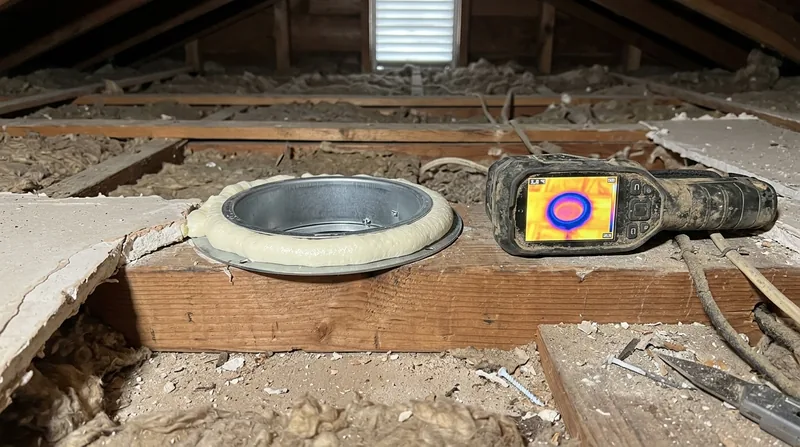




Top plates, can lights, chases and attic hatches pull humid Gulf air into a Corpus Christi house all year. The sticky feel indoors, the sweat on the AC registers, the salt-laden moisture that corrodes exposed metal and warps drywall, these are the calling cards of air leaks in the Coastal Bend. Air sealing in Corpus Christi stops that leak before it becomes a comfort problem or a structural one. We seal the gaps before insulating, and it cuts the sticky feel indoors and is the cheapest comfort fix on the Coastal Bend. Most homes sit on concrete slabs with vented attics running 140 to 160 degrees most of the year, and those attics are the biggest source of humidity infiltration. Sealing them first, then insulating, is the field-proven approach. Call us at (361) 278-8446 for a free estimate, or read on to understand why air sealing matters in your Corpus Christi home.
Why Air Sealing Matters in Corpus Christi's Hot, Humid Climate
Corpus Christi sits in the Texas Coastal Bend where Gulf humidity is constant and salt air is relentless. Every home in Bayview, Del Mar, Hillcrest, the Westside, Molina, Windsor Park, Lamar Park, Kings Crossing, Calallen, Portland and the barrier islands, whether it is a 1920s frame house on pier and beam or a modern two-story on a slab, faces the same problem: humid outside air finds its way inside through every unsealed opening. Top plates where the wall meets the attic, can light fixtures, electrical chases, attic hatches, and ductwork penetrations are the main culprits. That air carries moisture year-round. When it reaches cooler surfaces indoors, it condenses. The result is sticky drywall, peeling paint, corrosion on metal ductwork and fasteners, and a constant battle to keep the air conditioner running.
- Humid Gulf air infiltrates through top plates and wall-to-attic transitions, raising indoor humidity and energy bills.
- Salt air corrodes exposed metal, ductwork and fasteners faster when moisture is present indoors.
- Sealed attics reduce the load on the air conditioner by stopping warm, humid air from entering from above.
- Air sealing is the first step before any spray foam insulation, because foam applied over open leaks does not stop air movement.
Once you seal those leaks, the AC can cool the house instead of fighting humidity, and your energy bills drop. That is why air sealing is the single biggest credibility differentiator in the spray foam trade. We do it right.
Key info: In Corpus Christi, attic air leaks are the dominant failure mode. Vented attics pull warm, salt-laden Gulf air through every gap in the top plate. Sealing those gaps before insulating stops the moisture at the source and cuts the sticky feel indoors immediately. This is the reason air sealing is the cheapest comfort fix on the Coastal Bend.
For more on how insulation complements air sealing, see our page on attic spray foam insulation in Corpus Christi.
How We Perform Air Sealing in Corpus Christi Homes
Air sealing is a systematic process. We start by identifying the leaks, the places where conditioned air escapes and unconditioned air enters. In a Corpus Christi attic, that means the top plates where the walls meet the attic, the gaps around can light fixtures, electrical chases, plumbing penetrations, attic hatch frames, and the rim board where the band joist sits. We use closed cell spray foam to seal these gaps because it expands on contact, fills irregular shapes, and creates an air-tight seal in one pass. Once the foam cures, we can then apply attic insulation over it if needed. The whole job is fast, clean, and the results are immediate.
- We identify all air leaks in the attic, crawl space, rim joist or walls using visual inspection and thermal imaging if needed.
- We seal top plates, can light fixtures, electrical chases and ductwork penetrations with closed cell spray foam.
- We ensure proper mechanical ventilation during the cure process and observe a twenty-four to forty-eight hour re-entry window.
- We apply blown-in or spray foam insulation over the sealed areas once the foam has cured and hardened.
The result is an airtight attic or crawl space that stops humid air from entering your home. In a Corpus Christi climate, that single step cuts indoor humidity and makes the AC work less hard.
Local example: A 1970s ranch in Molina with a vented attic and exposed top plate had moisture sweating on the AC return ductwork every summer. After we sealed the top plate and the can lights with closed cell foam, the ductwork stayed dry and the homeowner reported a noticeably less sticky feel indoors within a week. The AC ran shorter cycles because it was no longer fighting humidity from above.
Learn more about the spray foam materials we use in our closed cell spray foam insulation page.
Air Sealing Methods and Approaches
| Method | Description | Best For |
|---|---|---|
| Closed Cell Foam Sealing | Two-part polyurethane spray foam applied to gaps and penetrations. Expands on contact, hardens in seconds, creates a rigid air seal with R-value 6 to 7 per inch. | Top plates, can lights, electrical chases, ductwork penetrations, rim joists, and any irregular gap that needs both an air and vapor seal. |
| Open Cell Foam Sealing | Lower-density spray foam that expands more slowly and remains semi-flexible. R-value 3.5 to 4 per inch. Breathable, so better for walls where vapor needs to move. | Interior wall chases, attic sidewalls, and areas where a softer seal is acceptable and cost is a priority. |
| Caulk and Weatherstripping | Polyurethane caulk or foam sealant applied to small gaps and cracks. Weatherstripping applied to attic hatches and access doors. Slower to apply, but good for small leaks. | Small cracks, gaps under 1 inch, attic hatch frames, and areas where spray foam overkill is not cost-effective. |
| Rim Joist and Band Joist Sealing | Closed cell foam applied to the rim board where the band joist meets the foundation. Stops both air and moisture infiltration from the crawl space or exterior. | Homes on piers or with crawl spaces, especially in coastal areas where salt air and humidity are high. |
Each method has its place. We choose the right tool for each gap, which is why the estimate process matters. A one-size-fits-all approach is usually a sign of an installer who does not know the trade.
Air Sealing Cost in Corpus Christi: What to Expect
Air sealing jobs in Corpus Christi start at around $650 for a focused project like sealing a single attic hatch and the top plate around it. A full attic air sealing, where we seal the entire top plate perimeter, all can lights, electrical chases, and ductwork penetrations, typically runs $1,200 to $2,500 depending on the size of the attic and the number of penetrations. Homes with larger attics, more can lights, or multiple zones naturally cost more. Homes in Portland, Rockport, Aransas Pass and the barrier islands sometimes run higher because of the extra salt-air corrosion and the harder access to older pier-and-beam foundations.
The biggest factor that moves the cost up is the size of the attic and the number of penetrations. A small 1950s ranch in Hillcrest with a compact attic costs less than a sprawling 1980s two-story in Kings Crossing with a bonus room and complex ductwork. Access also matters. If the attic is easy to work in and well-lit, the job moves faster. If it is cramped, hot, or cluttered with old insulation, it takes longer and costs more.
We also offer insulation removal if you have failed or contaminated insulation that needs to come out before we seal and re-insulate. That adds to the project cost, but it is the right approach for any retrofit.
The best way to know what your air sealing job will cost is to get a free estimate. We respond within 24 hours and provide written estimates with R-value and thickness specs. Call (361) 278-8446 or visit our pricing page for more details on what drives the cost in your area.
What to Look for When Hiring an Air Sealing Contractor Near Corpus Christi
Air sealing is a straightforward job, but it is also a place where corners get cut. A contractor who shows up with a caulk gun and promises to seal your attic in an hour is not doing the work right. A proper air sealing job requires identifying every leak, using the right material for each one, ensuring proper ventilation during cure, and waiting the full cure time before re-entry. Here is what to verify before you hire any contractor, including us.
- Ask for a written estimate that lists the specific areas to be sealed, the material to be used (closed cell, open cell, caulk), and the R-value and thickness specs.
- Confirm that the contractor is fully insured and ask for a certificate of insurance; verify the policy covers spray foam application and that the coverage is current.
- Ask about the contractor's approach to ventilation during cure; proper air sealing requires mechanical ventilation and a twenty-four to forty-eight hour re-entry window.
- Check references from recent jobs in Corpus Christi, Portland, Rockport or nearby areas; ask how long the job took and whether the homeowner noticed a difference in humidity or comfort indoors.
- Confirm that the contractor understands any permits or building department requirements for your city; air sealing usually does not require a permit, but it is worth asking.
The cheapest estimate is not always the best one. A contractor who quotes a price with no inspection, no breakdown of materials, and a promise to finish in half a day is cutting corners. The right contractor takes time to understand your home, explains what leaks exist and why they matter, and stands behind the work with a reasonable warranty on the installation.
Ready to get started? Contact us for a free estimate and we will walk you through the whole process.
Air Sealing in Corpus Christi: Pricing Guide
| Service | Price | Details |
|---|---|---|
| Single leak or hatch seal | Starting at $650 | Attic hatch frame, single can light fixture, or one small top plate section sealed with caulk or closed cell foam |
| Partial attic air sealing | Starting at $1,200 | Top plate sealing on one side of the home or around a specific zone, including can lights and electrical chases in that area |
| Full attic air sealing | Starting at $1,800 | Complete top plate perimeter, all can lights, electrical chases, ductwork penetrations and attic hatch sealed with closed cell foam |
| Rim joist and crawl space air sealing | Starting at $1,500 | Band joist perimeter sealed with closed cell foam to stop air and moisture infiltration from below; cost depends on crawl space size and access |
| Multiple zones or complex attic | On estimate | Homes with bonus rooms, multiple attic zones, extensive ductwork or difficult access require on-site inspection before pricing |
| Free estimate and travel | No charge | Response within 24 hours at (361) 278-8446; travel included in Corpus Christi and surrounding service areas with no mileage fee |
Indicative pricing, the exact cost depends on square footage, finish, and site access. Free personalized estimate within 24h at (361) 278-8446.


