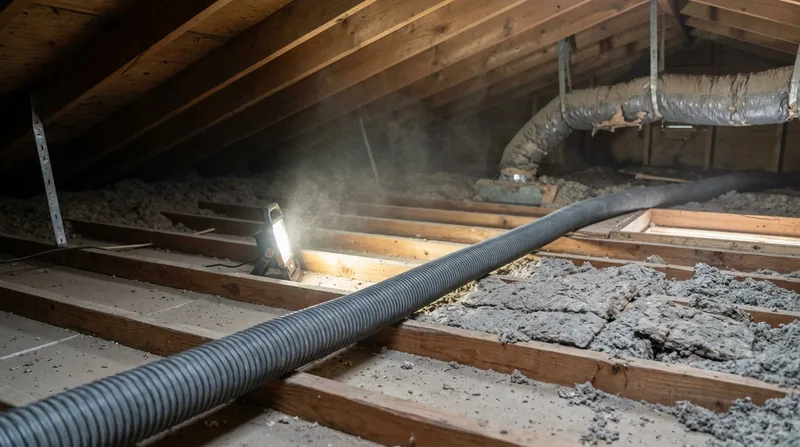




Corpus Christi's coastal climate and year-round heat make old insulation a liability faster than inland Texas. Your attic sits 140 to 160 degrees most of the year, and the salt-laden Gulf humidity pushes moisture inward constantly. Blown-in batts that settled, fiberglass matted by water intrusion, or spray foam jobs gone wrong do not get patched over. Insulation removal in Corpus Christi clears the failed material out so new foam can go in right, and sometimes it uncovers why the old install failed in the first place. We pull out storm-soaked batts, moldy debris, and rodent nests without disturbing the attic structure. We also cut out spray foam that was sprayed too thick, in the wrong ratio, or over a wet substrate. The job is messy, regulated, and most installers will not touch it. We do it every week.
Why Insulation Removal Matters in Coastal Corpus Christi and Beyond
Corpus Christi sits on the Coastal Bend, where Gulf humidity is high year-round and moisture works its way into attics from every angle. Old insulation absorbs that moisture and loses its R-value. Settled blown-in becomes a thermal bridge. Fiberglass matted by water does not insulate at all. Moldy material degrades indoor air quality and can spread. Rodent nests left in place are a health risk and a fire hazard. Before any new spray foam goes in, the old material must come out cleanly.
- We vacuum out settled or water-damaged blown-in and fiberglass batts without leaving debris in the joists.
- We remove failed spray foam jobs that were sprayed over wet substrates, in wrong ratios, or at unsafe thickness.
- We flag vermiculite for testing by a licensed professional and do not disturb it ourselves.
- We pull out storm-soaked material and rodent nests before they compromise the new install or your home's air quality.
The removal is the foundation of every retrofit. Done right, it sets up the new foam for maximum performance and longevity.
Key info: In Corpus Christi, Portland, and Rockport, attic moisture failures are the norm, not the exception. Homes built in the 1950s through 1970s often hold settled fiberglass over vented attics running 160 degrees in July. That combination guarantees moisture migration and mold risk. Removal and re-insulation with closed-cell foam stops the cycle.
For guidance on what applies at your address, check the City of Corpus Christi Building Department or your local city's permitting office. Attic ventilation and thermal barrier rules vary by municipality.
How We Handle Insulation Removal in Corpus Christi: Step by Step
Removal is not demolition, but it is heavy work that requires equipment, containment, and disposal logistics. We start with a walkthrough to assess what is in the attic, what is salvageable, and what must come out. We set up negative pressure ventilation to keep dust and debris from entering living spaces. We pull out batts, blown-in, and failed foam in sections, load it into bags or bins, and haul it to a licensed disposal facility. Once the attic is clear, we inspect the substrate for moisture, mold, or structural damage before any new foam is applied.
- We inspect the attic to identify what material is present, its condition, and what must be removed.
- We set up mechanical ventilation and containment to protect your home from dust and debris during removal.
- We remove blown-in, batts, and failed spray foam in staged sections without damaging the roof deck or joists.
- We haul all material offsite to a licensed facility and dispose of it properly.
- We inspect the substrate for moisture damage, mold, or structural issues and report findings before new foam is installed.
- We flag any vermiculite for testing and leave it undisturbed until a professional has cleared it.
The goal is a clean, dry, inspected surface ready for new attic spray foam insulation or other insulation work.
Local example: A Westside brick ranch built in 1965 had 6 inches of settled fiberglass over a vented attic. Summer attic temps hit 158 degrees. The insulation had zero R-value left. We removed all of it, inspected the deck for moisture (found evidence of past leaks), and replaced it with 5.5 inches of closed-cell foam sealed to the deck. New attic temp: 136 degrees. No more moisture intrusion.
Removal Methods: What Works for Different Materials
| Material Type | Removal Approach | Why It Matters |
|---|---|---|
| Blown-in fiberglass or cellulose | Vacuum extraction with containment and negative pressure ventilation | Prevents fiberglass dust from entering living spaces and protects HVAC equipment |
| Fiberglass batts (settled or water-damaged) | Hand removal in sections, bagged and hauled offsite | Allows inspection of deck and joists for moisture and mold without creating airborne particles |
| Failed spray foam (over-thick, wrong ratio, wet substrate) | Mechanical cutting and removal by hand, piece by piece | Requires skill to remove foam without damaging roof deck or insulation cavity, and to prevent off-gassing |
| Vermiculite (suspected asbestos) | Left undisturbed, flagged for testing by a licensed professional | Vermiculite may contain asbestos; disturbing it without a certified test creates liability and health risk |
Insulation Removal Cost in Corpus Christi: What to Expect
The cost of insulation removal in Corpus Christi depends on the volume of material, access, substrate condition, and disposal distance. A typical attic removal starts at $950 and moves up based on square footage, material type, and whether the substrate needs repair before new foam is installed. Blown-in removal is generally faster than batt removal. Failed spray foam removal costs more because it requires careful cutting and labor. We provide a written estimate with square footage, cubic yards of material, and itemized labor before any work begins.
- Attic size and insulation depth directly determine labor hours and dumpster size.
- Water-damaged or moldy material may require additional containment and disposal protocols, adding to cost.
- Failed spray foam removal is priced by the square foot and complexity because cutting it out takes time and skill.
- Substrate repairs (rot, moisture damage) are quoted separately once the old material is out.
- Travel is included in our service area across Corpus Christi and surrounding cities, with no separate mileage fee.
For a detailed breakdown and a free estimate, call (361) 278-8446 or visit our pricing page. We respond within 24 hours.
What to Look for When Hiring an Insulation Removal Contractor Near Me in Corpus Christi
Not every spray foam or insulation contractor will remove old material. Many prefer to spray over it, which is a shortcut that fails. A contractor worth hiring will inspect the attic first, tell you what must come out, and do the removal cleanly before any new foam is applied. Ask any contractor for proof of insurance, references from recent removal jobs, and confirmation that they understand local permitting rules for your city. In Corpus Christi, Portland, Rockport, and other cities in our service area, local rules vary by municipality, so check with your city building department before work begins.
- Ask for a written estimate that lists square footage, material type, volume, and disposal method, not just a lump sum.
- Request references from at least two recent insulation removal jobs in your area or similar homes.
- Confirm that the contractor carries full insurance and can provide a certificate of coverage before work starts.
- Ask how they handle ventilation and containment during removal to protect your home's air quality.
- Verify that your city requires contractor registration and confirm the contractor's status with your local building department before signing any agreement.
- Understand whether your HOA has rules about exterior work if you live in a master-planned community, though insulation removal is interior and rarely restricted.
We are fully insured and have been removing and replacing insulation in the Corpus Christi area since 2012. For a free estimate with no obligation, contact us today or call (361) 278-8446.
Insulation Removal in Corpus Christi: Pricing Guide
| Service | Price | Details |
|---|---|---|
| Blown-in or batt removal | Starting at $950 | Includes vacuum extraction, containment, and offsite disposal for attics up to 1,500 sq ft |
| Failed spray foam removal | Starting at $1,200 | Mechanical cutting and hand removal; price depends on foam thickness, coverage area, and substrate condition |
| Moisture inspection and substrate assessment | Included | After removal, we inspect deck and joists for water damage, mold, or structural issues before new foam install |
| Disposal and hauling | Included | All material bagged, removed, and disposed of at licensed facility; no separate tipping or dumpster fees |
| Estimate | Free | Written estimate with square footage, material volume, and itemized labor, response within 24 hours |
Indicative pricing, the exact cost depends on square footage, finish, and site access. Free personalized estimate within 24h at (361) 278-8446.


