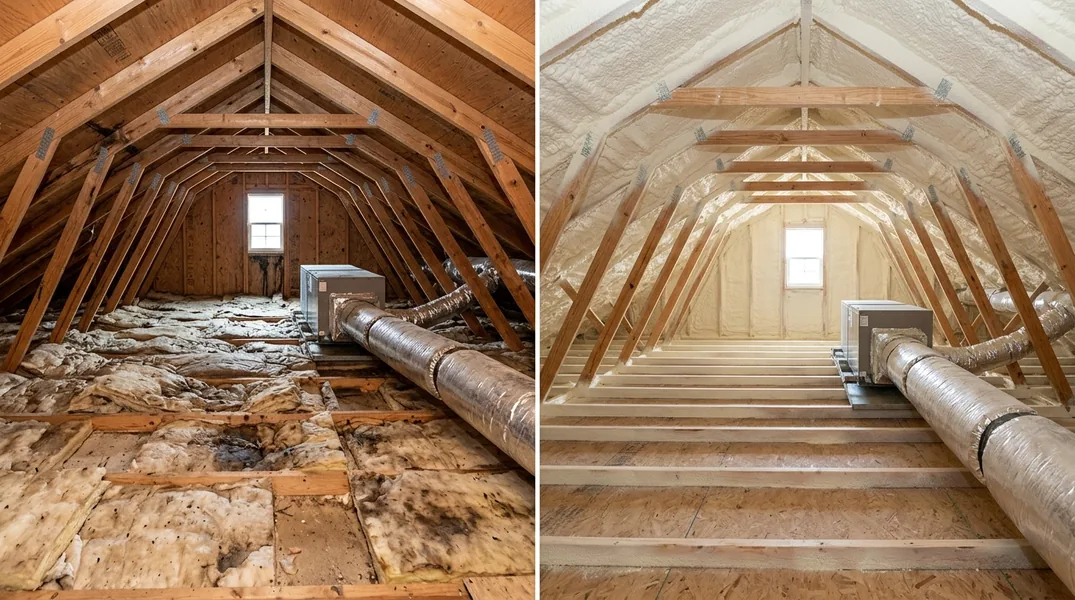
Is Spray Foam Insulation Worth It? The Honest Assessment
Homeowners in Corpus Christi often ask whether spray foam insulation is truly worth the investment. The answer depends on your specific situation, budget, and long-term goals for your home. Spray foam offers exceptional insulation value and air-sealing properties that traditional fiberglass batts simply cannot match. However, it also comes with higher upfront costs and requires careful installation by qualified professionals to ensure safety and performance.
The real question isn't whether spray foam works, but whether it makes sense for your particular property. If you're struggling with high cooling bills, moisture problems, or uncomfortable temperature swings in Corpus Christi's hot, humid climate, spray foam insulation may deliver significant returns through energy savings and improved comfort. Many homeowners see their investment recouped within 5 to 10 years through reduced HVAC costs, especially in our region where air conditioning runs year-round. The durability factor also matters: spray foam doesn't settle, compress, or degrade like traditional insulation, meaning your investment performs consistently for decades.
Is Spray Foam Insulation Safe? What You Need to Know
Safety is a legitimate concern, and it deserves a straightforward answer. When properly installed by certified technicians, spray foam insulation is safe for your home and family. The key word here is proper installation. Spray foam must be applied according to manufacturer specifications, with correct mixing ratios, adequate ventilation during application, and proper curing time before occupancy. Poor installation practices are where safety problems arise, which is why choosing an experienced, licensed contractor matters enormously.
The installation process itself does involve chemicals and fumes that require protective measures during application. This is precisely why you should never attempt DIY spray foam installation. Professional installers use proper personal protective equipment, ensure adequate air circulation, and follow strict safety protocols. Once the foam has fully cured (typically 24 hours), it becomes inert and poses no ongoing risk to your family. Attic Spray Foam Insulation work performed by qualified professionals includes post-installation verification that the foam has properly cured and that your home is safe for reoccupancy.
Understanding Spray Foam Off Gassing and Curing
Spray foam off gassing is one of the most misunderstood aspects of this insulation type. Off gassing refers to the release of volatile organic compounds (VOCs) that occurs during and immediately after foam application. This process is completely normal and expected, but it must be managed properly. During installation, the chemical reaction that creates the foam generates these compounds, which is why ventilation and evacuation of the home are standard safety protocols. Professional crews will typically recommend that occupants stay away from the work area during application and for a specified period afterward.
The curing period is critical. Most spray foam products fully cure within 24 to 48 hours, at which point off gassing essentially ceases. After curing, the foam becomes a stable, inert material that does not continue to release harmful compounds. Some homeowners worry about long-term off gassing, but extensive research and real-world experience show that properly installed and cured spray foam does not pose ongoing VOC concerns. The confusion often stems from improper installation or inadequate curing time. When you work with experienced professionals like Corpus Christi Spray Foam Insulation, you can be confident that curing protocols are followed correctly, protecting your family's health and safety.
Spray Foam Insulation Pros and Cons: A Balanced Look
Understanding the advantages and disadvantages of spray foam helps you make an informed decision. On the positive side, spray foam delivers superior air sealing that blocks drafts, moisture infiltration, and pest entry. It expands to fill every crack and crevice, creating an airtight thermal envelope that fiberglass cannot achieve. This translates to lower energy bills, better temperature control, and improved indoor air quality. Spray foam also resists moisture absorption, making it ideal for humid climates like ours. Additionally, Closed Cell Spray Foam Insulation offers structural reinforcement and adds rigidity to walls and attics.
The disadvantages are equally important to acknowledge. Spray foam costs more upfront than traditional insulation, typically running $1.50 to $3.50 per board foot depending on the type and application. It requires professional installation, which means you cannot cut costs with DIY approaches. Once installed, spray foam is difficult to remove or modify if you need to access wall cavities for plumbing or electrical work later. Some people also report sensitivity to odors during curing, though this is temporary. Open Cell Spray Foam Insulation is more affordable than closed cell but offers lower R-value and less moisture resistance, making closed cell the better choice for attics in humid environments.
Common Spray Foam Insulation Problems and How to Avoid Them
While spray foam is generally reliable, certain problems can occur when installation standards are not followed. Improper mixing of foam components leads to incomplete expansion, poor adhesion, and reduced insulation performance. Inadequate ventilation during application can trap fumes and create safety hazards. Applying foam in unsuitable temperature or humidity conditions results in curing issues and reduced effectiveness. Overfilling cavities can cause pressure on building materials and structural stress. These problems are entirely preventable through professional installation by trained, certified technicians who understand material science and building physics.
Another common issue involves moisture entrapment when foam is applied over wet surfaces or in high-moisture environments without proper preparation. This can eventually lead to mold growth or structural damage. The solution is simple: hire professionals who perform thorough site assessment, prepare surfaces correctly, and use appropriate foam types for your specific application. Wall & Injection Foam Insulation in existing walls requires particular expertise to avoid hitting electrical wiring or plumbing. When you contact Corpus Christi Spray Foam Insulation at (361) 278-8446 for a free estimate, our team evaluates your home's specific conditions and recommends the safest, most effective approach for your situation.
Attic Spray Foam Insulation Cost in Corpus Christi: What to Budget
Cost is a significant factor in the spray foam decision. Attic Spray Foam Insulation typically ranges from $1,500 to $3,000 for a typical residential attic, though larger homes or complex installations may cost more. This represents a higher initial investment compared to fiberglass batts, which might cost $500 to $1,000 for the same space. However, the energy savings and durability of spray foam often justify the premium. Many homeowners find that reduced cooling costs pay back the investment within five to ten years, especially in Corpus Christi where air conditioning is essential year-round.
Several factors influence final pricing. The type of foam (open cell versus closed cell), the square footage of the area, existing conditions, and accessibility all affect the cost. Closed cell foam costs more but provides higher R-value and moisture resistance, making it the premium choice. Open cell foam is more budget-friendly but better suited for interior applications in dry climates. The best way to understand what your project will cost is to request a free estimate from a local professional. Corpus Christi Spray Foam Insulation provides transparent pricing based on your specific needs, with no hidden fees or surprise charges.
Looking for a professional spray foam insulation contractor in Corpus Christi? Corpus Christi Spray Foam Insulation responds fast for all your spray foam insulation needs.
Get a Free Quote