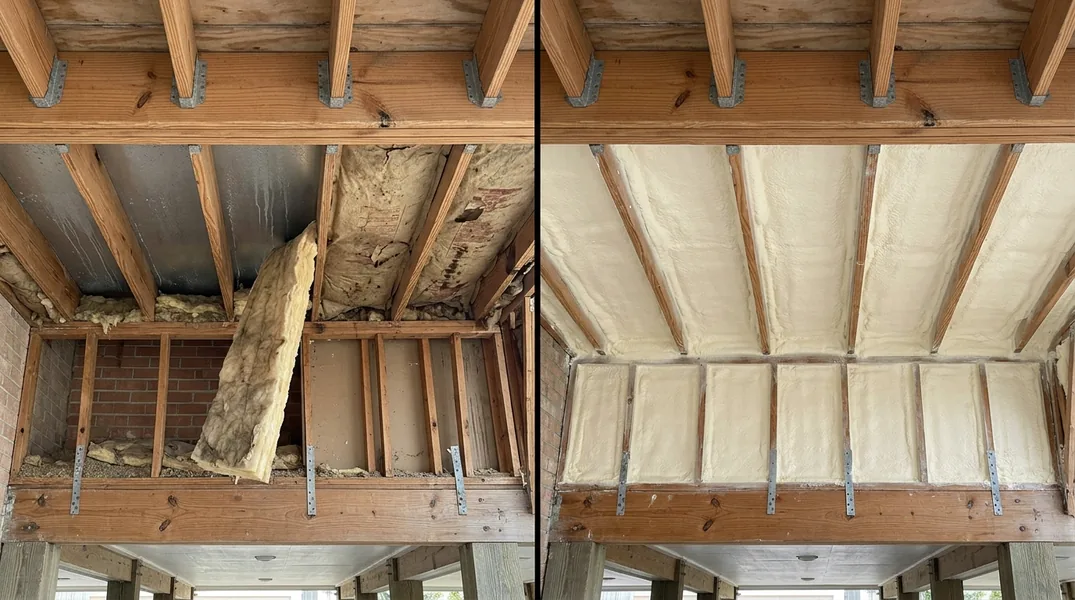
The Honest Truth About Spray Foam vs Blown-In Insulation
When homeowners in Corpus Christi start researching attic insulation, they often feel overwhelmed by conflicting advice. One contractor swears by spray foam. Another insists blown-in is the only sensible choice. The truth is more nuanced, and it depends entirely on your situation.
At Corpus Christi Spray Foam Insulation, we believe in telling homeowners what they actually need, not what generates the biggest invoice. Sometimes that means recommending Attic Spray Foam Insulation. Other times, a simple top-up of blown-in insulation is the smarter, more cost-effective solution. This article walks you through the real differences so you can make an informed decision for your home.
Spray Foam vs Blown-In Insulation: The Core Differences
Spray foam and blown-in insulation work in fundamentally different ways. Spray foam expands when applied, creating a continuous air seal that fills gaps, cracks, and irregular spaces. Blown-in insulation (typically cellulose, fiberglass, or mineral wool) is pumped into cavities as loose fibers that settle and compress over time. Both have merit, but they solve different problems.
Closed Cell Spray Foam Insulation offers the highest R-value per inch and provides both insulation and an air barrier in one application. Open Cell Spray Foam Insulation is more affordable than closed cell and still provides excellent thermal performance, though it doesn't block air and moisture the same way. Blown-in insulation, by contrast, is less expensive upfront and works well when your attic structure is already sound and you simply need more R-value.
The climate in Corpus Christi matters here. Our hot, humid coastal environment means moisture and air leakage are real concerns. That's why spray foam's air-sealing properties appeal to many local homeowners. However, if your attic already has decent ventilation and your main issue is insufficient insulation depth, blown-in may be perfectly adequate.
Spray Foam vs Fiberglass: Which Is Better for Attics?
Fiberglass is the most common blown-in insulation material, and it's been used in American homes for decades. It's affordable, relatively easy to install, and achieves solid R-values around 3.2 to 3.8 per inch depending on density. The downside is that fiberglass doesn't seal air leaks. If your attic has gaps around ductwork, electrical penetrations, or rim joists, warm or cool air will bypass the insulation entirely.
Spray foam, by contrast, actively seals those leaks as it expands. This means your HVAC system doesn't have to work as hard to maintain your desired temperature. Over time, that energy savings can offset the higher initial cost of spray foam installation. For homeowners with existing air leakage problems or those building new, spray foam typically delivers better long-term performance. However, if your attic is already well-sealed and you're simply adding insulation depth, the performance gap narrows considerably, and the cost difference becomes the deciding factor.
Another consideration: fiberglass can absorb moisture in humid climates, which reduces its effectiveness and can promote mold growth. Spray foam resists moisture absorption, making it the safer choice in Corpus Christi's salty, humid air. That said, proper attic ventilation mitigates this risk for fiberglass, so it's not a deal-breaker if ventilation is adequate.
When Blown-In Insulation Is the Smarter Choice
Here's where honesty matters most: not every attic needs spray foam. If your home already has a functioning attic with adequate ventilation, no major air leaks, and sufficient structural integrity, adding blown-in insulation on top of what's there is often the right answer. This is especially true if your current insulation is simply too thin (below R-30 or R-38, depending on your climate zone) and you're looking to upgrade without a full renovation.
Blown-in insulation is also the practical choice if budget is your primary constraint. A top-up job costs significantly less than a full spray foam installation and delivers measurable energy savings. For many homeowners, a $1,500 blown-in upgrade beats waiting for a $4,000 to $6,000 spray foam project that may not be necessary. The math changes if you're dealing with serious air leakage, moisture problems, or structural damage, but for routine insulation upgrades, blown-in makes sense.
Additionally, if you have existing insulation and your attic structure is intact, removing old insulation and starting fresh with spray foam may be overkill. A careful inspection by a professional can determine whether your attic is a candidate for a simple top-up or whether it truly needs comprehensive foam treatment. This is exactly the kind of honest assessment Corpus Christi Spray Foam Insulation provides during a free estimate.
Spray Foam vs Cellulose: Performance and Longevity in Humid Climates
Cellulose is another popular blown-in option, made from recycled paper treated with fire-retardant chemicals. It achieves R-values around 3.6 per inch and is more environmentally friendly than fiberglass. However, cellulose is more susceptible to moisture absorption than fiberglass, which is a significant concern in coastal areas. Once cellulose absorbs moisture, it can sag, settle unevenly, and lose R-value. It also becomes a potential breeding ground for mold and mildew.
Spray foam, whether open or closed cell, resists moisture far better. Closed cell foam in particular provides a vapor barrier that protects the rest of your attic structure. In humid, salt-air environments like ours, this moisture resistance translates to longer-lasting performance and fewer callbacks for mold remediation. While cellulose may seem attractive on price, the long-term maintenance and potential moisture issues make spray foam the more reliable investment for Corpus Christi homeowners.
That said, if your attic is well-ventilated and you maintain proper airflow, cellulose can still perform adequately. The key is ensuring your ventilation system is working properly and that you monitor the insulation periodically for signs of moisture. Most homeowners, however, prefer the peace of mind that comes with spray foam's inherent moisture resistance.
Best Insulation for Attic: Factors Beyond Material Comparison
Choosing the best insulation for attic spaces requires looking beyond just the material. Your current insulation level, attic ventilation, air sealing condition, local climate, budget, and long-term plans all factor into the decision. An attic that's poorly ventilated might desperately need spray foam to prevent moisture issues. An attic with excellent ventilation and minor insulation shortfalls might benefit more from a blown-in top-up.
Another often-overlooked factor is your home's age and construction. Older homes sometimes have structural issues, settling, or irregular joist spacing that makes blown-in insulation difficult to install effectively. Spray foam conforms to these irregularities and fills gaps that loose-fill insulation would miss. Newer, more uniform attics may be better suited to blown-in products. Similarly, if you're planning major renovations or HVAC upgrades, the timing of your insulation work matters. Spray foam should typically be installed before other work, while blown-in can be added last.
The best approach is a professional site assessment. During a free estimate, our team evaluates your specific situation and recommends the option that delivers the best value for your home. Sometimes that's spray foam. Sometimes it's blown-in. And sometimes it's a hybrid approach. Call us at (361) 278-8446 to schedule your consultation.
Attic Spray Foam Insulation Cost in Corpus Christi: What to Budget
Cost is often the deciding factor, so let's address it directly. Blown-in insulation typically costs $0.50 to $1.50 per square foot for material and labor, depending on the type and depth. A 1,500-square-foot attic top-up might run $750 to $2,250. Spray foam costs more, generally ranging from $1.50 to $3.50 per square foot, putting a full attic at $2,250 to $5,250 or more.
However, these upfront costs don't tell the whole story. Spray foam's superior air-sealing properties often lead to energy savings of 15% to 30% on heating and cooling costs, depending on your current conditions and usage. For a homeowner planning to stay in their house long-term, that payback period can be five to ten years. Blown-in insulation saves energy too, but the savings are typically more modest because it doesn't address air leakage.
For specific pricing on your project, contact Corpus Christi Spray Foam Insulation at (361) 278-8446 or request a free estimate online. We'll assess your attic, measure square footage, and provide a detailed quote so you can compare options with full information. We also serve neighboring areas like Portland, Rockport, and Aransas Pass if you're in those communities.
Making Your Decision: The Bottom Line
The bottom line is this: there's no universally correct answer to spray foam versus blown-in. Both have legitimate applications, and the right choice depends on your specific attic condition, budget, climate concerns, and long-term goals. If you have a well-maintained attic with adequate ventilation and simply need more insulation depth, a blown-in top-up is honest, practical, and cost-effective. If you're dealing with air leakage, moisture concerns, or structural irregularities, spray foam delivers superior performance and peace of mind.
The worst approach is letting marketing hype or contractor bias drive your decision. At Corpus Christi Spray Foam Insulation, we're committed to recommending what your home actually needs. If that's a simple blown-in top-up, we'll tell you. If spray foam is the right investment, we'll explain why and walk you through the benefits. Our goal is your satisfaction and your home's long-term comfort and efficiency.
Ready to get answers for your specific situation? Contact us today at (361) 278-8446 or fill out our free estimate form. We'll inspect your attic, answer your questions, and provide honest recommendations you can trust.
Looking for a professional spray foam insulation contractor in Corpus Christi? Corpus Christi Spray Foam Insulation responds fast for all your spray foam insulation needs.
Get a Free Quote